Meet Our Newest Cacao Origin: Colombia
When you only use three ingredients to make chocolate, there really isn’t anywhere for a mediocre ingredient to hide.
Cacao beans. Local honey. Cacao butter.
That’s it.
So yes, we can be a little obsessive about what goes into our chocolate. Maybe more than a little. We spend a lot of time tasting, testing, comparing and asking questions about cacao because when your ingredient list is this short, every single ingredient has to earn its place.
And we’ve found a new one that we are incredibly excited to share with you.
We’re proud to introduce Colombia as the newest cacao origin at 712 Chocolate.
Our new cacao comes from Cacaomante, grown at El Diamante, a family-owned farm in Colombia’s Magdalena Medio region. The farm began its cacao project in 2018 with a focus on producing high-quality fine-flavour cacao through careful farming, fermentation and processing. In 2025, their beans were named Best Cacao Bean in the Magdalena Medio Cocoa Aromas competition.
(So apparently we’re not the only ones who think these beans are pretty special.)
Getting there is part of the story
El Diamante sits near the Middle Magdalena River at about 110 metres above sea level.
There’s also no road to the farm.
You get there by canoe.
Which is slightly more adventurous than our drive to the chocolate shop.
The cacao grows in a biodiverse environment among native trees, with a strong focus on responsible farming and caring for the land. The Cacaomante project is led by three women producers and also provides flexible work, training and opportunities for women in the surrounding rural community.
For us, knowing where our cacao comes from matters. Not just the country on the label, but the farm, the people and the work behind every bean.
A lot happens before the cacao gets to us
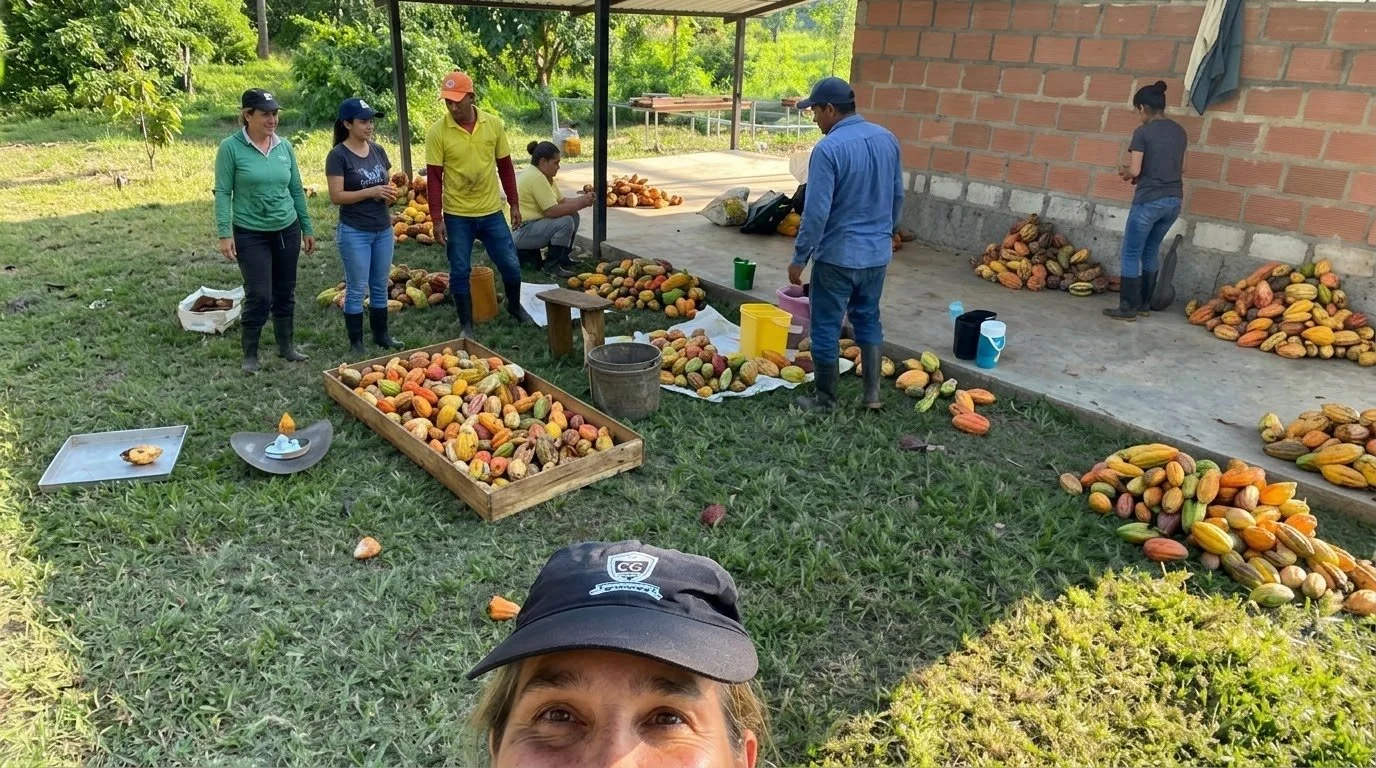
Once the cacao pods are ripe, they are harvested by hand and carefully sorted.
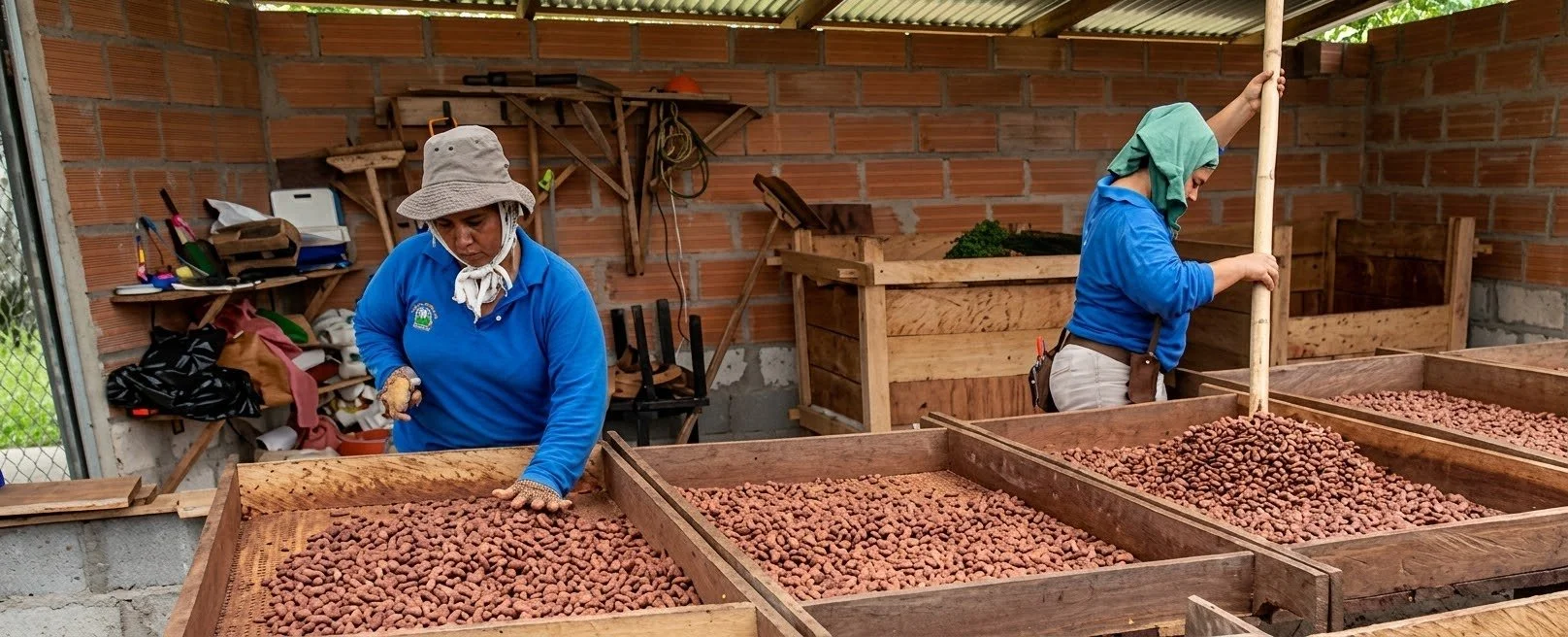
The beans are then fermented for roughly four to six days in oak boxes. During fermentation, they are turned by hand and closely monitored before being naturally dried in the sun on raised wooden tables.
It’s a very hands-on process.
Which we appreciate, because we’re also the kind of people who will adjust something tiny in a batch of chocolate and then discuss it for far too long.
That careful fermentation and drying helps develop the flavours already inside the bean before we ever roast it here in Saskatchewan.
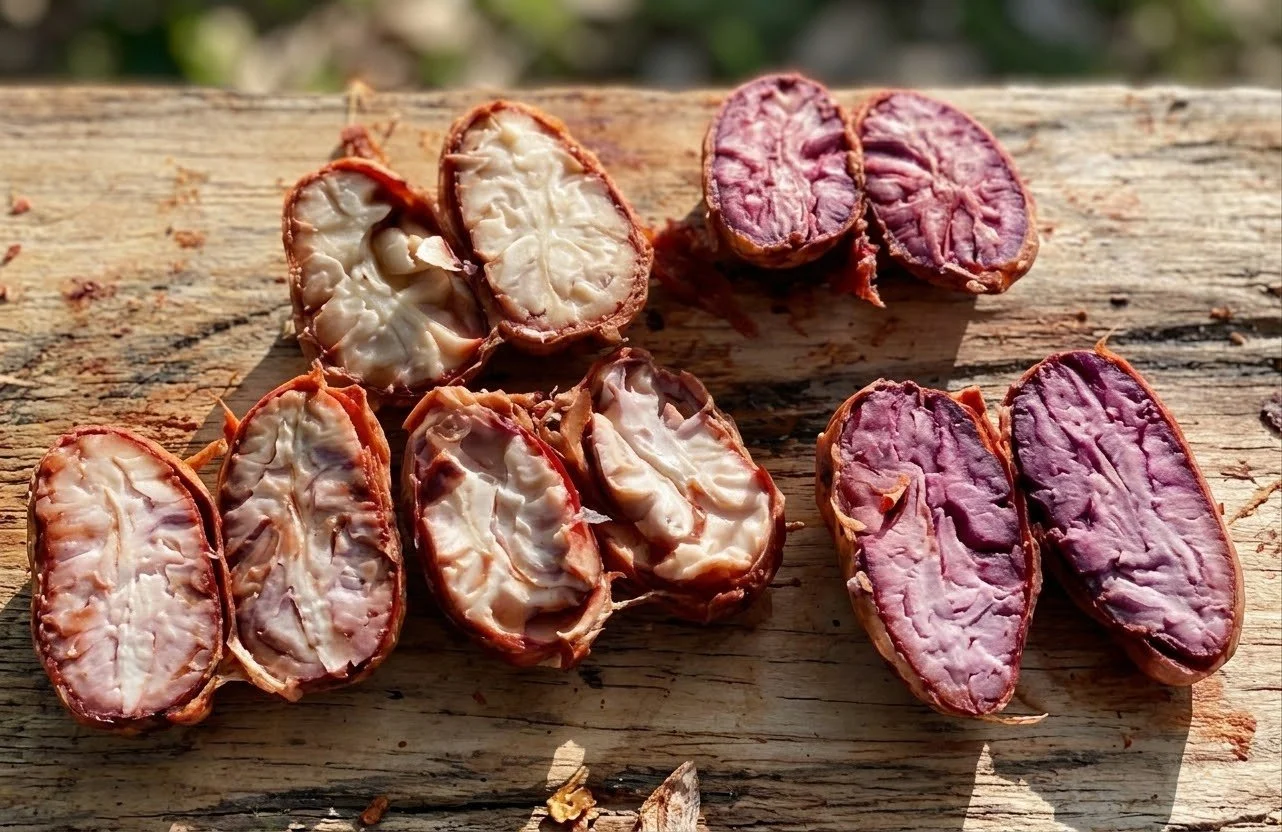
What does Colombian cacao taste like?
This cacao is made up of fine-flavour varieties that are primarily Trinitario with a strong Criollo influence. Those Criollo-leaning varieties tend to produce smaller yields, but they are valued for their sensory quality.
The flavour profile can include notes of:
nuts • fruit • warm spices • wood • light florals • brown fruit
There’s also a bright fruity acidity and a rich cacao aroma.
Of course, flavour notes are never quite as neat as a list on a page.
One person tastes fruit. Someone else gets spice. Someone else just says, “Wow, that’s really good.”
(All three are acceptable answers.)
The really exciting part for us is seeing what happens once we start roasting, grinding and working with these beans in our own chocolate.
Why origin matters so much to us
With only three ingredients, cacao does a lot of the heavy lifting.
Change the cacao and you change the chocolate.
That’s why we’re always looking for beans that bring something distinctive to the table. Peru, Ecuador and Tanzania each have their own personality, and now Colombia is joining the lineup.
The recipe can stay beautifully simple while the flavour changes completely depending on where the cacao was grown and how it was handled.
That still feels a little bit like magic to us.
(Although there is significantly more cleaning involved than magic usually suggests.)
We can’t wait for you to try this one.
Look for our new Colombia origin in upcoming 712 Chocolate products very soon.